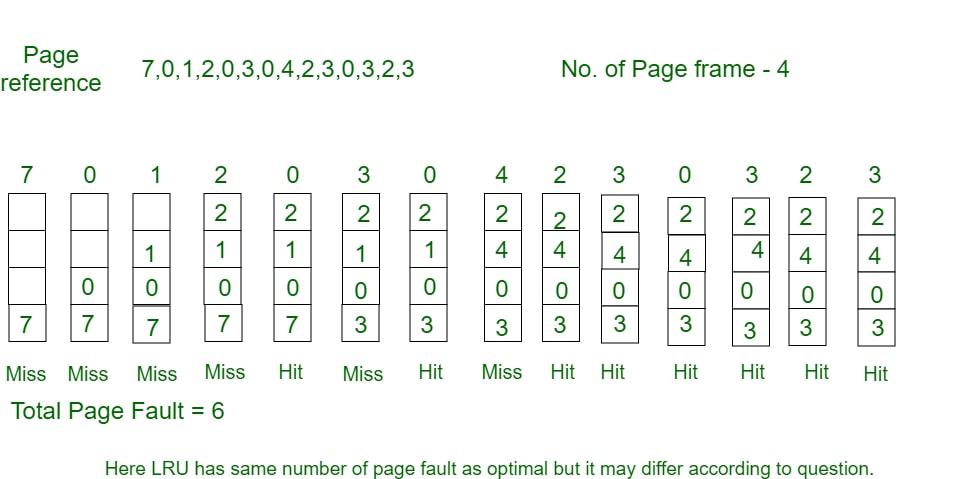
The First In First Out (FIFO) algorithm is one of the simplest page replacement strategies that replaces the oldest page in memory when a page fault occurs. It operates on the principle that the page that has been in memory the longest is the least likely to be used again.
How It Works
FIFO maintains a queue of all pages currently in memory, with the oldest page at the front of the queue. When a page fault occurs and all frames are full, the algorithm removes the page at the front of the queue (the oldest page) and adds the new page at the rear of the queue. This approach mimics a queue data structure where the first element to enter is the first one to leave.
Advantages
- Extremely simple to implement and understand
- Low overhead and minimal computational requirements
- Easy to track with just a queue data structure
- No need for complex usage history or predictions
- Fast execution with constant time complexity
Disadvantages
- Susceptible to Belady's Anomaly (more frames can lead to more page faults)
- Does not consider page usage frequency or patterns
- May replace frequently used pages simply because they are old
- Often performs poorly with programs that have frequently accessed pages
- No adaptability to changing access patterns