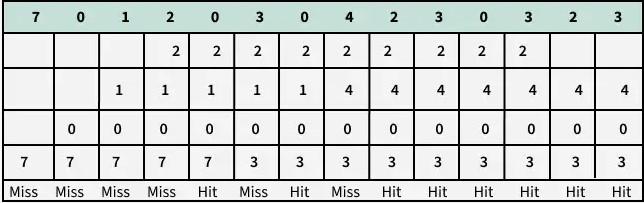
The Optimal Page Replacement Algorithm algorithm (also known as OPT or Belady's Algorithm) is a theoretical page replacement policy that replaces the page that will not be used for the longest period of time in the future. It provides the best possible page fault rate of any algorithm and serves as a theoretical benchmark.
How It Works
When a page fault occurs and all frames are full, the Optimal algorithm looks into the future of the program's execution to determine which pages in memory will not be referenced for the longest time. It then selects that page for replacement. This approach ensures that the page being replaced is the one that would be unused for the maximum duration, minimizing the likelihood of requiring that page again soon.
Advantages
- Guarantees the lowest possible page fault rate for any given memory access pattern
- Not susceptible to Belady's Anomaly
- Provides a theoretical upper bound on performance for all other algorithms
- Perfect for benchmarking and comparing other page replacement algorithms
- Makes optimal decisions with complete knowledge of future references
Disadvantages
- Impossible to implement in practice as it requires future knowledge
- Purely theoretical with no practical applications in real operating systems
- Future page references are typically not known in advance
- Computationally complex even in simulation environments
- Only useful as a benchmark for comparing other practical algorithms